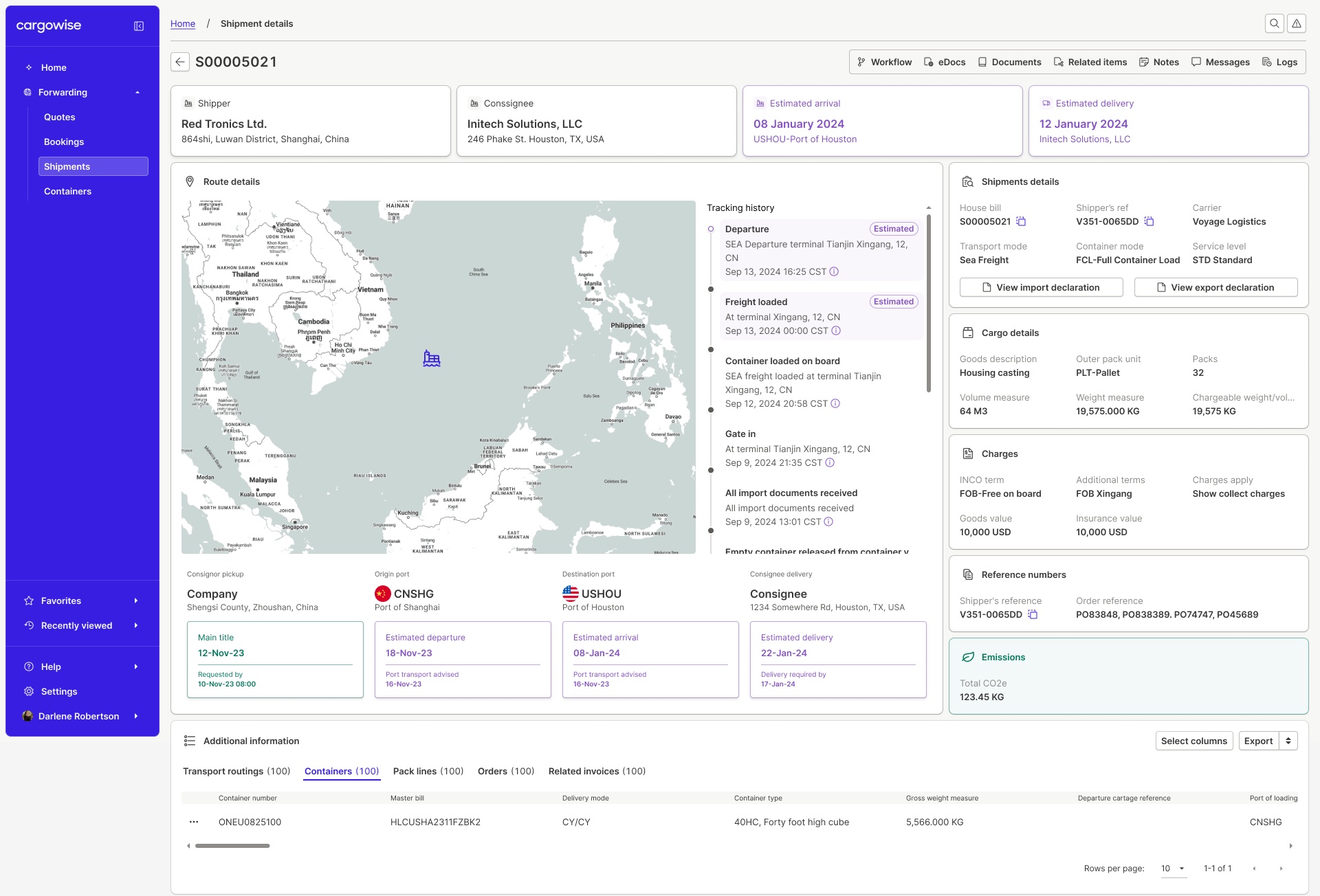
Forwarding — the front door, and the structure underneath it.
The forwarding module is Neo's front door, the shipment-booking and tracking layer the other tracks hang off. I owned Customs, Warehouse, and Accounting screen-by-screen; on forwarding my contribution came through the shared components all four modules drew on, plus the structural work that placed Neo inside the wider WiseTech ecosystem.
Mapping the rate ecosystem
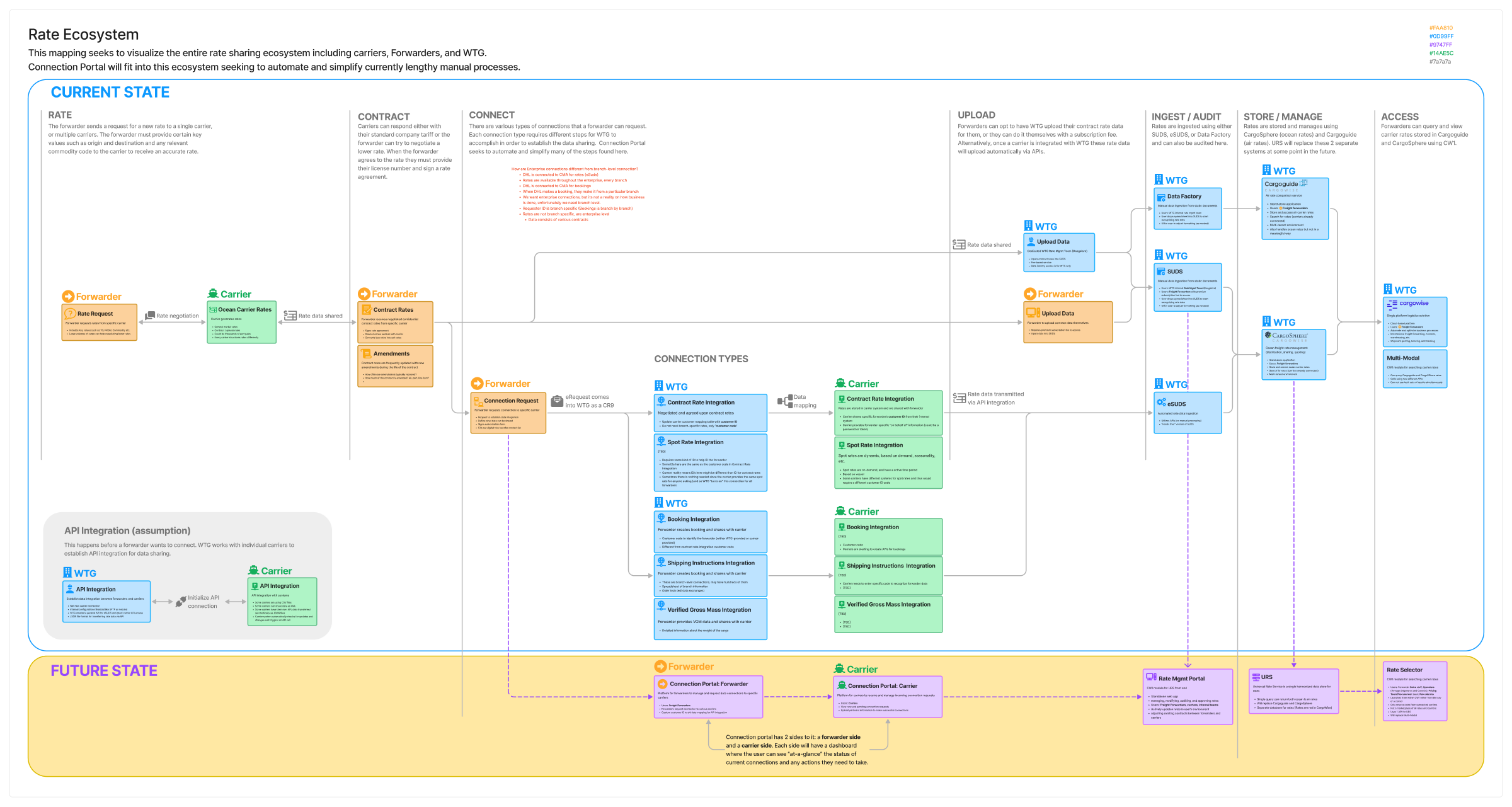
Before any structure could be designed I had to understand how rates actually move. In the current state, a forwarder requests a rate from a carrier with origin, destination, and commodity code, negotiates it, and signs a rate agreement; the connection itself can carry contract rates, spot rates, bookings, shipping instructions, or verified gross mass, and each type needs different steps from WiseTech to establish the data sharing. Ingested rates land in separate systems for air and ocean and get queried back through CargoWise One. I mapped that ecosystem end to end, current state and future state, to show where a connection portal could automate the manual steps. The point of the work: let a goods owner bring their own forwarders into the system and streamline the paperwork, so they get a quote faster and lock in a better rate.
The site structure
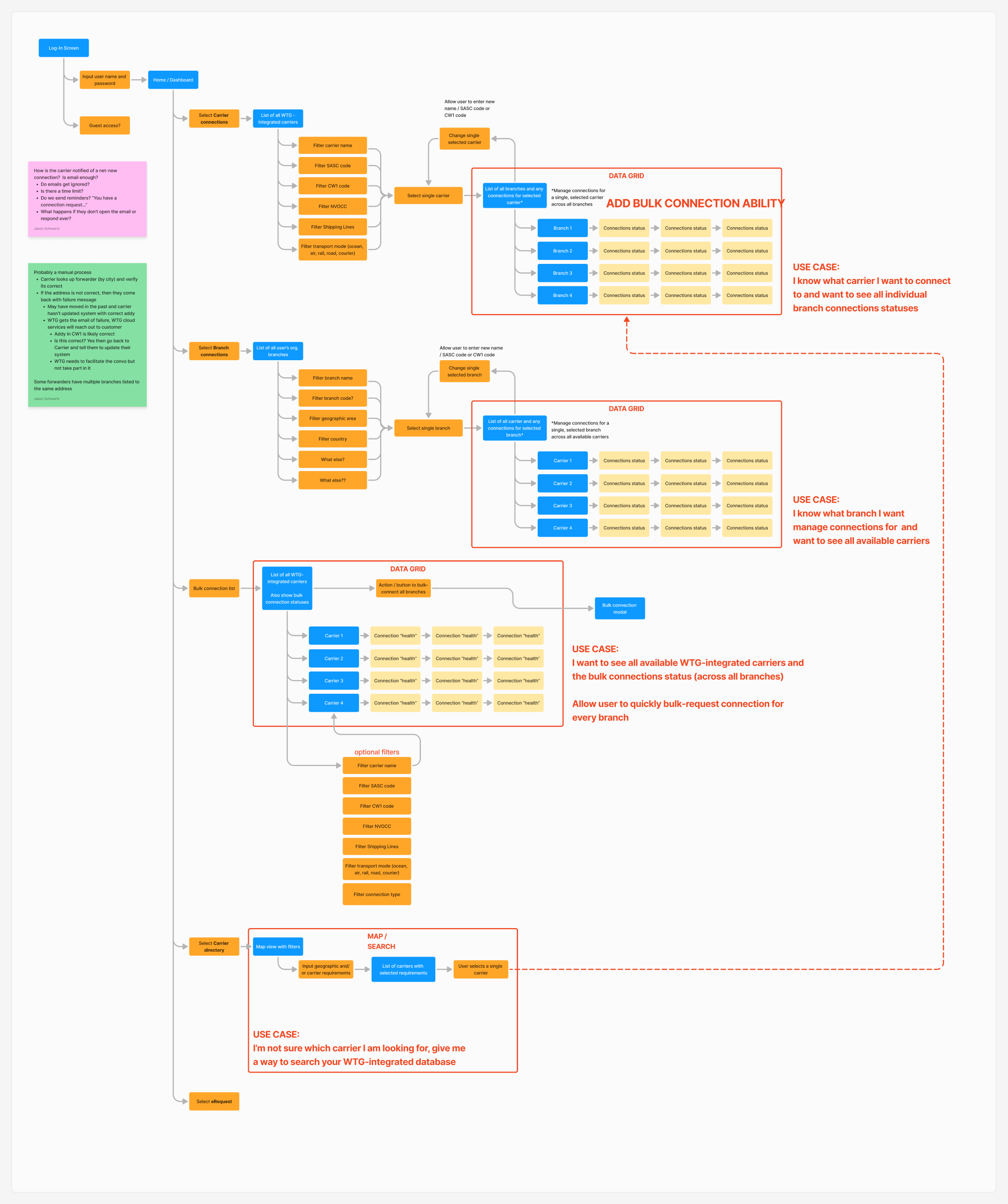
From the map came the structure: four ways into the same connection data, one per real question a user shows up with. I know the carrier, show me every branch. I know the branch, show me every carrier. Show me everything WiseTech integrates with so I can bulk-request connections. And I'm not sure what I'm looking for, let me search the directory on a map. Each path lands on the same data grids, so the mental model stays whole no matter the entrance.
Information that survives the device
The prototype suite validated not just the flows but information prioritization across devices — which KPIs surface first, what collapses into secondary layers, and what has to be one tap away on a phone.
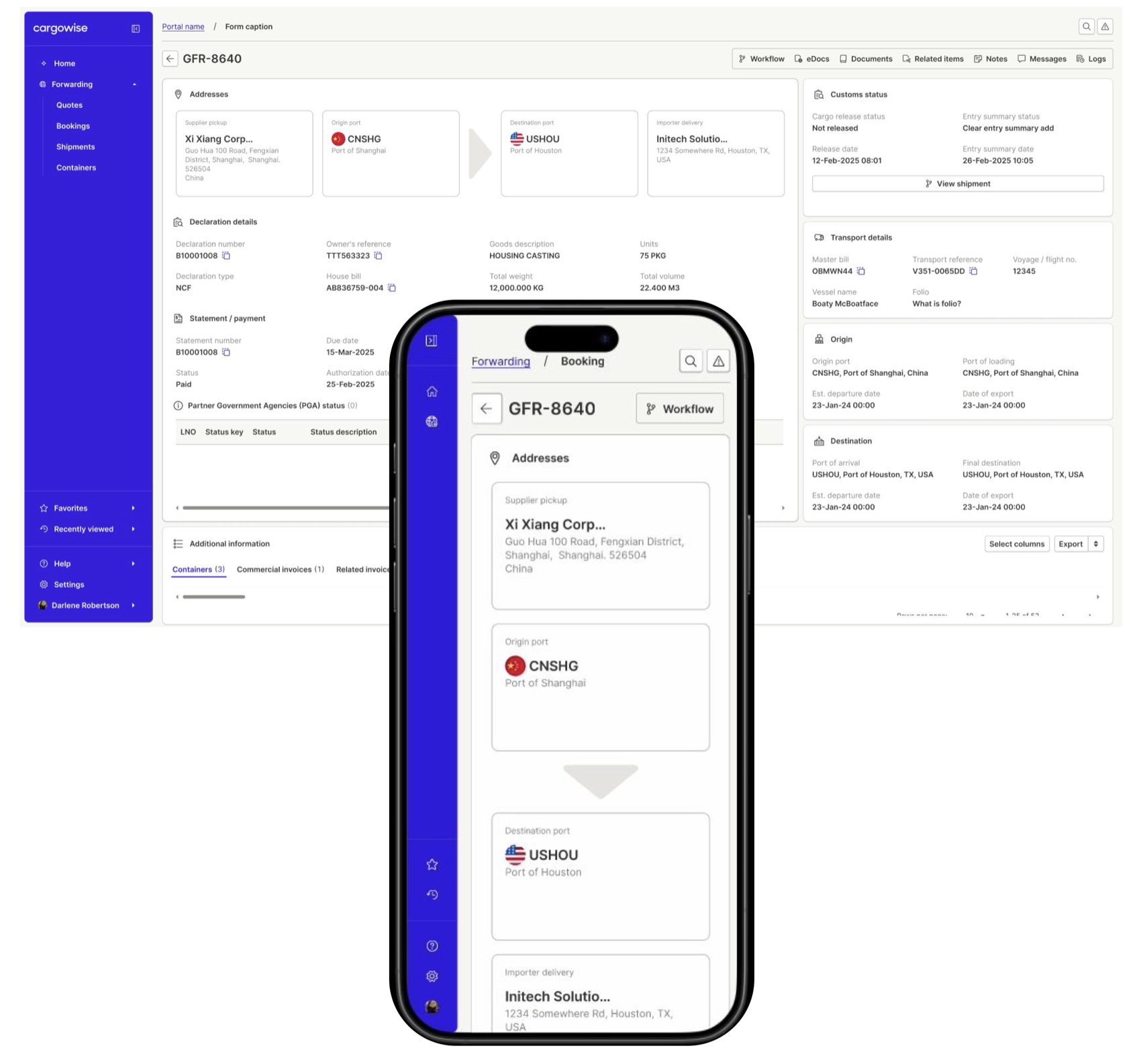
The shipped shipment view carries the same logic. A route map with live tracking history answers "where is it?" first; the right rail holds shipment, cargo, charges, and even emissions; and every related-data tab keeps Select columns and Export so operators can pull the grid into their own tools.