UX strategy for a 0→1 pitch — the trades skills gap, redesigned around earning.
The crisis — a trades skills gap
The premise is real and well-documented in the pitch: roughly 1M+ unfilled trade jobs in the US, 7.6M housing units needed by 2030, a semiconductor-technician shortage, and a wave of retiring experts widening the gap every year. The existing training pipelines are costly, fragmented, and not scaling to meet that demand. That's the opening the concept is designed into.
Three personas — trainer · apprentice · partner
The strategy is anchored on three people who each need a different tone and a different dashboard:
- Trainer / Mentor — a 50-something master craftsman, decades in the field, not tech-averse but
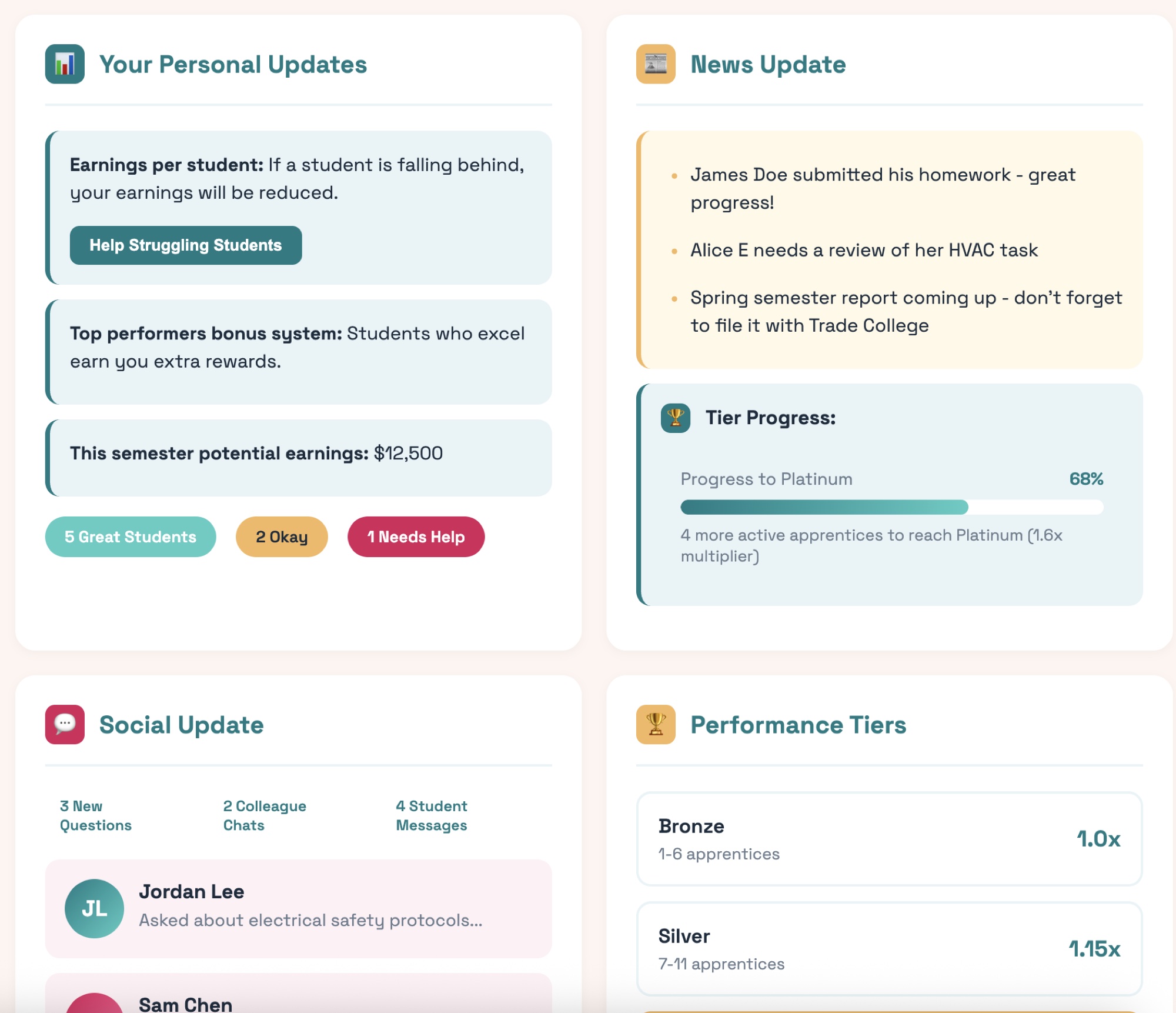
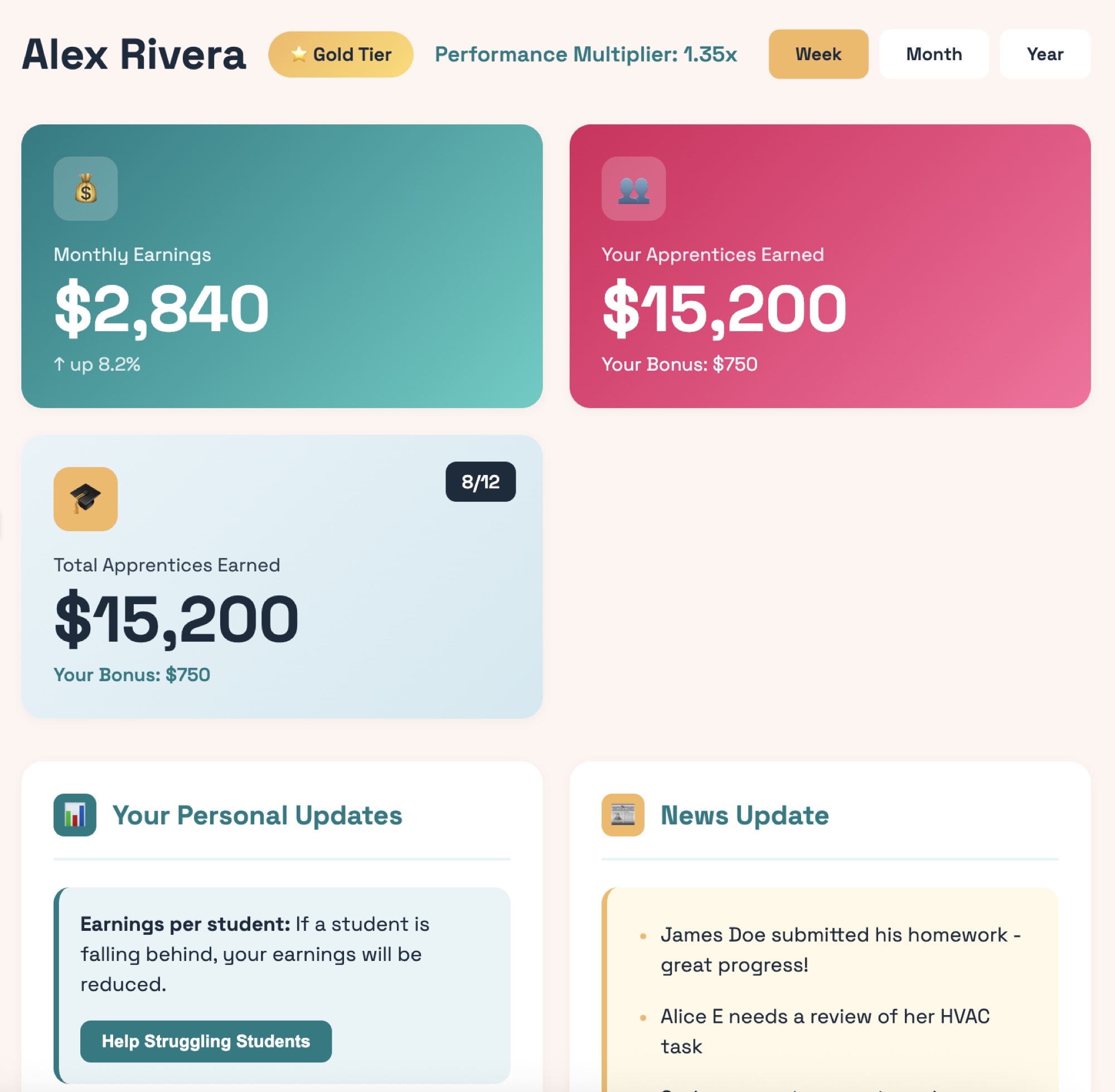
skeptical of "AI hype." Wants to pass on knowledge and leave a legacy without bureaucracy. Design answer: mentor as coach, not admin — clear progress dashboards, feedback playback, an earnings tracker, a legacy view ("you've trained 15 certified apprentices").
- Apprentice — mid-20s to mid-30s, maybe ex-service or leaving low-wage retail, wants a
tangible career without debt. Hands-on learner who wants human validation, not a faceless AI. Design answer: supportive and motivational — AI feedback overlays, a "next milestone" dashboard, video lessons from real mentors, a "shadow your mentor" mode.
- Ecosystem Partner — a state program, DoD, or infrastructure employer funding pipelines and
answerable to legislators. Design answer: analytical and outcome-focused — cohort analytics, exportable reports, a geographic expansion map.
Solution & MVP
The product is multimodal AI coaching plus master-craftsman mentors, run as mentor–apprentice cohorts on a network-effect model where apprentices eventually become mentors. The core UX insight that reframed the whole thing: for both sides, this is a path to income, not "an educational experience" — so the MVP leads with earning potential, financial transparency (earnings, cohort size, referral bonuses), and trust signals (real brand names, real locations). AI is treated as a means, never the selling point. The MVP surface I scoped: the onboarding flows for mentor and apprentice, the feedback loop, and the earnings/progress dashboards — not the full pitch.
Design system v1
A v1 token-and-component set to carry those three tones from one foundation, polished enough to drive mid-fi prototypes and a dev handoff. Everything sized to a real 0→1 constraint: enough system to prototype and pitch, not a pretend production library.
Field notes