Teaching lawyers to trust a machine that reads contracts, with no precedent to copy.
The trust problem
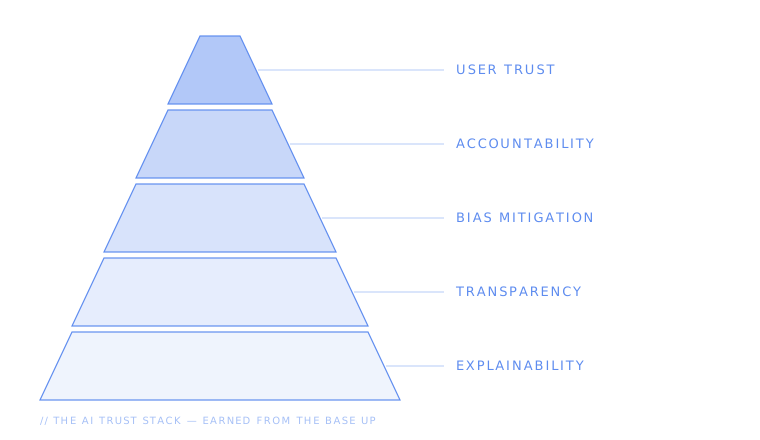
Contract review is slow, manual, and full of edge cases, and the existing contract-management tools offered storage, not understanding. Research with legal teams, contract managers, and procurement kept landing on the same finding: trust is the currency. Users didn't want the AI to act on its own — they wanted it to explain itself. Every extracted clause and every risk score needed visible evidence behind it, or the whole product was a non-starter for the exact people it was built for.
Make the AI explain itself
So explainability became the design system: clause extraction cards, evidence highlights in the document itself, confidence scores on every prediction, plain-language "why this is a risk" explanations, and version-comparison overlays. The AI never just asserted; it showed its work. That principle did more for adoption than any feature, and it's the thesis I've carried into every AI product since: the autonomy runs in the background, and the human stays in control.
Built for how lawyers actually read
Legal workflows are nonlinear. People jump between sections, compare versions, and hunt for one specific obligation, so the interface supported exploration instead of forcing steps: side-by-side AI-assisted comparison views showing added, removed, and modified obligations plus suggested negotiation points, jump-to-clause filters, an obligations summary panel, a risk overview dashboard, and semantic search. You could search for "termination risk," not just matching text.
One framework, every contract type
Every contract is a snowflake: NDAs, MSAs, SoWs, custom formats. Instead of designing screens per document type, I built a modular interaction framework on the entities underneath (clauses, obligations, parties, dates) and the AI behaviors that touch them. That's what let the product scale across contract types and clients without a redesign each time.
Branding, the website, and merch
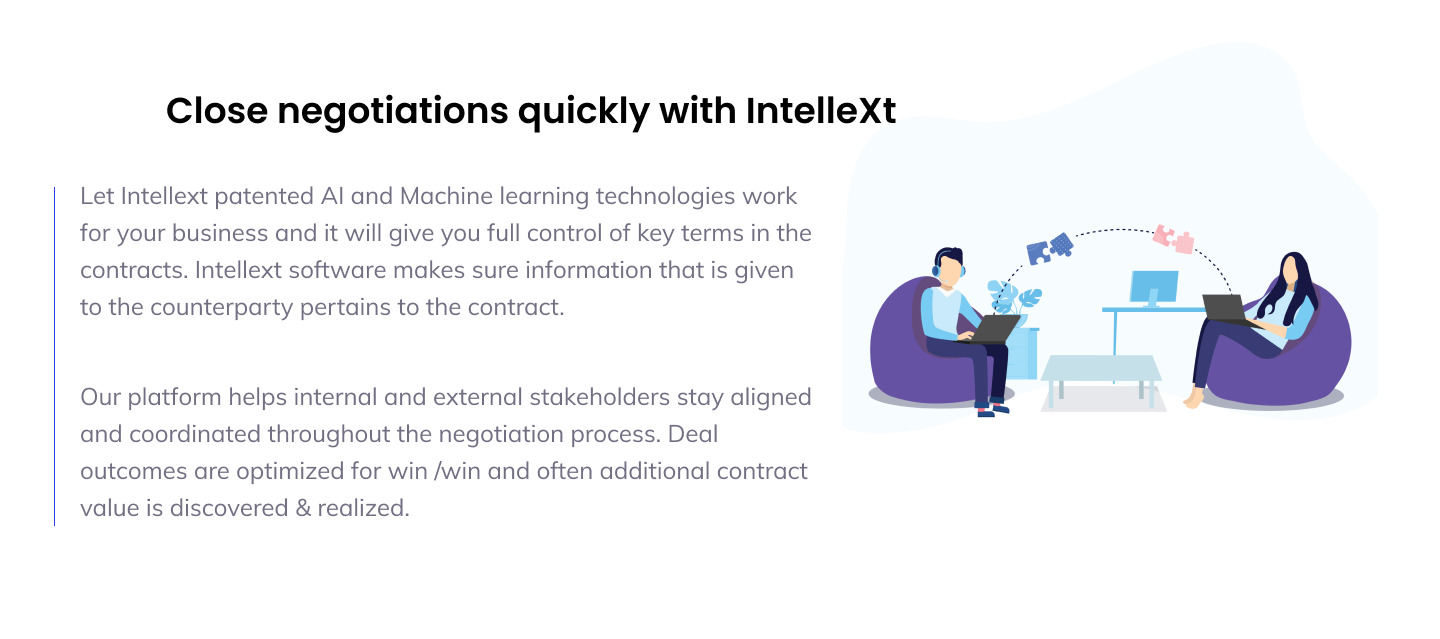
The founding-designer job description always has fine print: you also make the company look real. I helped develop the brand identity and presentation templates, designed the marketing website for desktop and mobile, and yes, the merch. The site had one job, to make "AI negotiates your contracts" feel trustworthy enough to click Request Demo.
Where it landed
Reviews got measurably faster: time-to-insight dropped about 35%. The prototype and product vision became part of the due-diligence story, and Microsoft acquired the company. The UX patterns carried into development after the acquisition. First designer, first patterns, real exit.