Warehouse — from "call the warehouse" to customer-managed inventory.
The problem
Before, a goods owner couldn't see stock, create a receipt, or place an order without going through staff, so arrivals and stockouts were surprises.
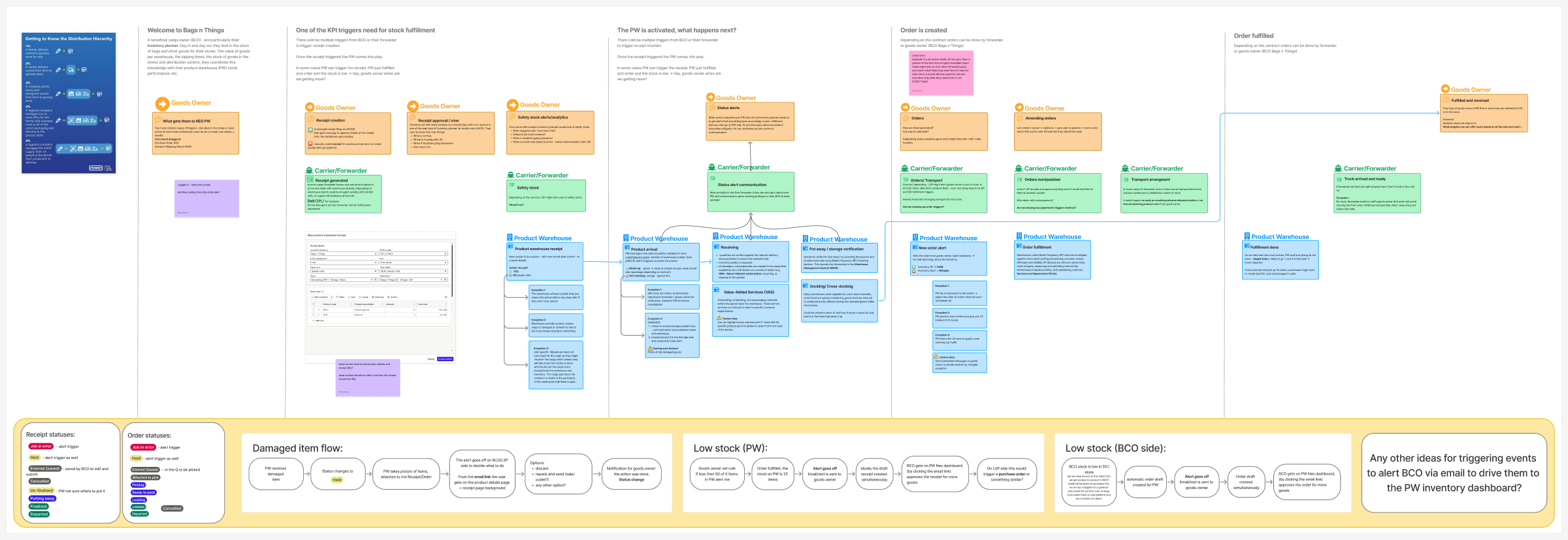
The whole flow on one wall
Before drawing screens I blueprinted the full lifecycle across its three actors: the goods owner, the carrier or forwarder, and the product warehouse. One wall, receipt creation to order fulfilled, with the exception paths that make warehouses hard: damaged items (the warehouse photographs the goods, and the owner decides to discard, repack, or send to outlet), low stock seen from the warehouse side, and low stock seen from the goods owner's side. It also pinned down the status vocabulary — job in error, hold, picking, ready to pack, loading, finalized — so every screen later spoke the same language.
Two levels, wired to rules
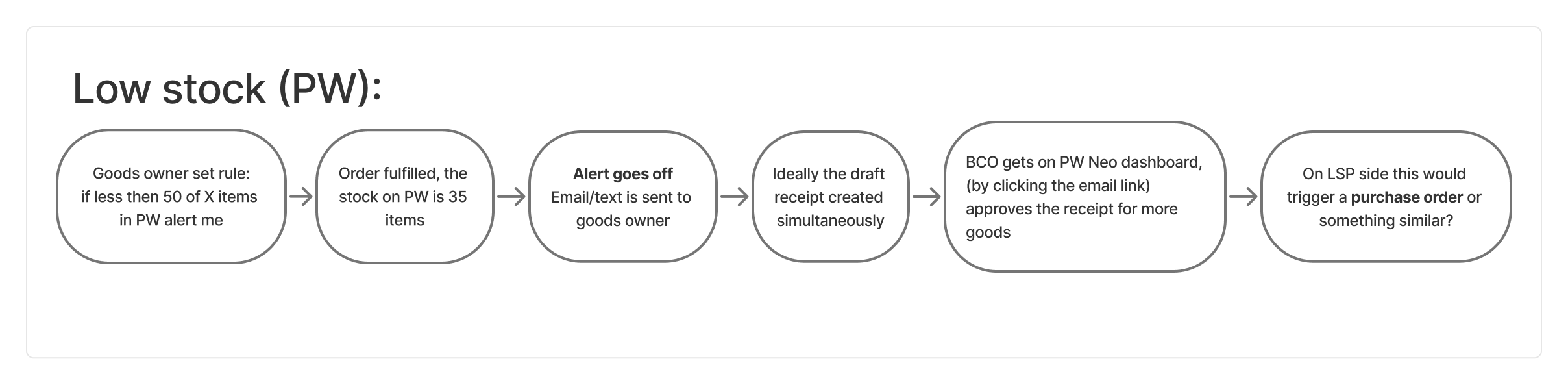
I built a two-level model: a Level 1 dashboard of KPIs (inventory value, safety-stock alerts, overflow) drilling into Level 2 data-grid drawers for products, orders, and receipts. It's wired to rule-based automation: a goods owner sets a rule ("fewer than 50 of item X, alert me"), the alert fires, and a draft receipt or order is created in the same moment. The user approves it from the dashboard.
The order form itself is stackable custom fields the forwarder configures per client, so each goods owner sees only the fields that apply to them.
The approval gate
Amending an order is really cancel, duplicate, approve under the hood, yet reads to the user as a simple edit. Automation never acts unsupervised. That approval gate is the whole trust mechanism: self-service earns trust by keeping the operator in control, not by removing them.
What shipped
The shipped screens carry the two-level model straight through: KPI tiles for active, accepted, pending, expiring, and completed quotes sit above the full data grid, so the planner reads the state of the warehouse in one glance and drills into the rows only when something needs them.
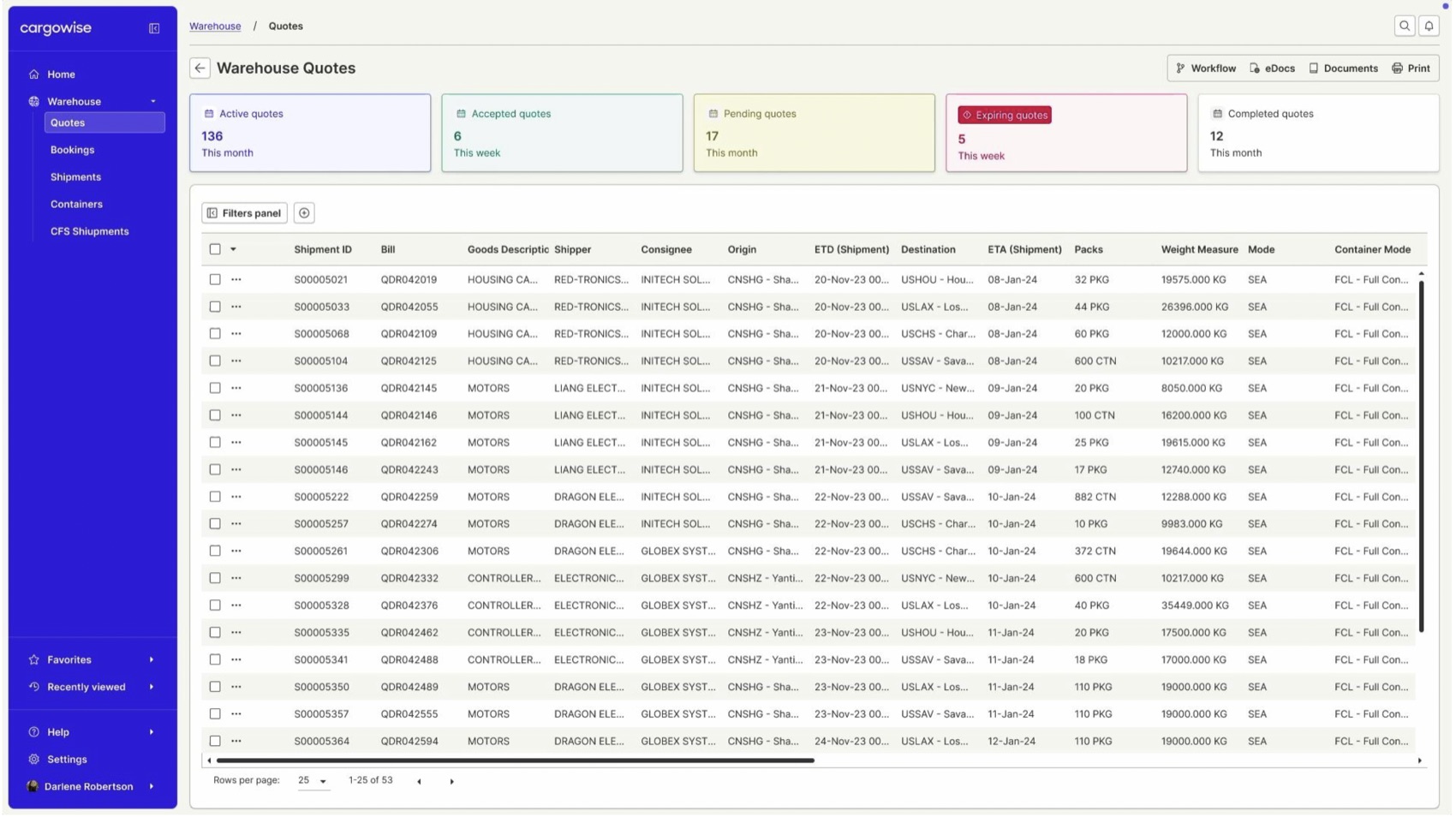
What it enabled: customer-managed inventory, cargo-arrival alerts, and automated reordering, with a human approval step wherever automation touches stock.