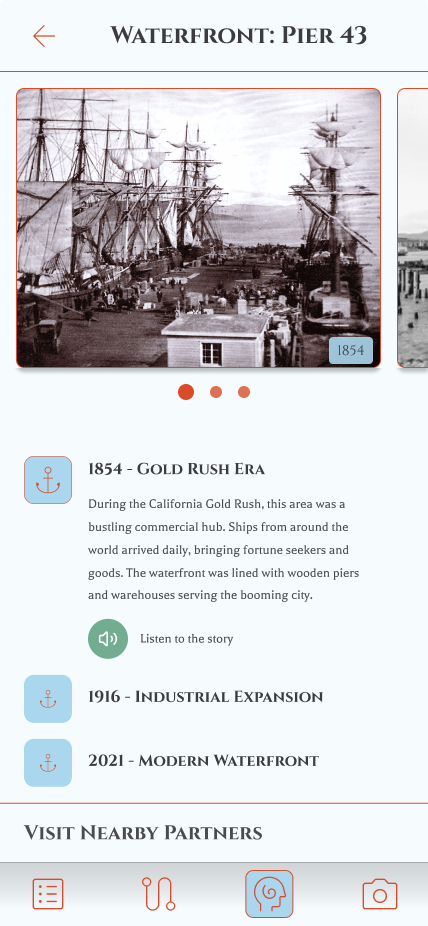
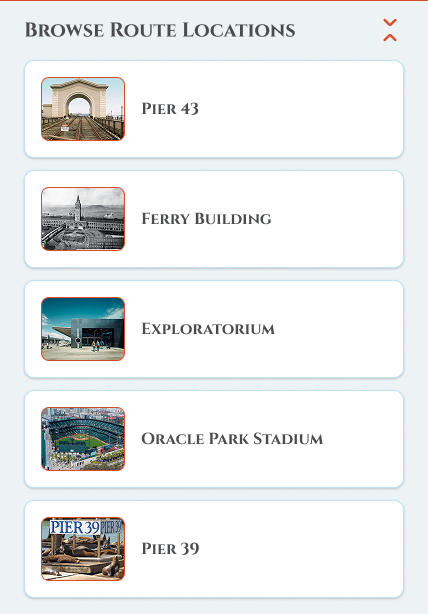
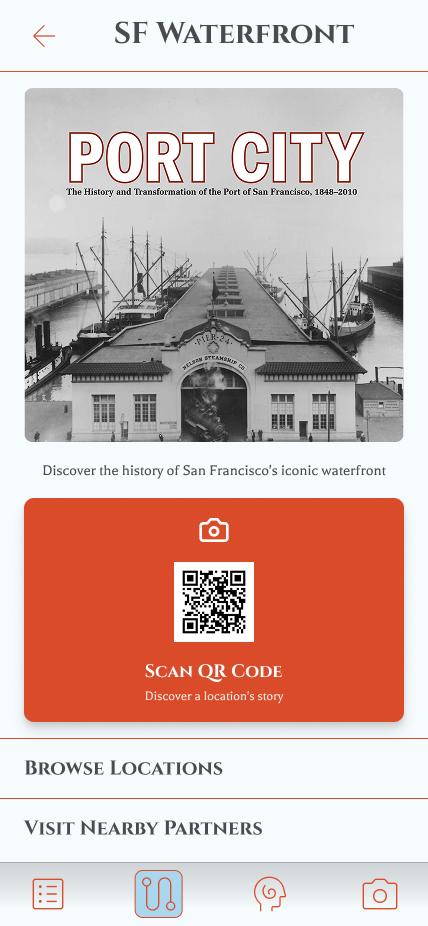
TimeLens is an AI-powered platform that transforms archival documents, photographs, and historical records into immersive temporal experiences. At its core is a specialized LLM agent trained on city-specific archives—learning the visual language of different eras, architectural evolution, and cultural narratives. The system doesn't just retrieve information; it synthesizes historical knowledge to generate cinematic video reconstructions or spatial world models for AR/VR implementation. Users point their phone at a landmark and watch time unfold—seeing Pier 43 transition from Gold Rush-era sailing ships to bustling ferry terminal to modern monument. While this prototype focuses on San Francisco's Embarcadero, the agent architecture is location-agnostic: feed it Paris, Tokyo, or Cairo archives, and it adapts. The technology is built; the canvas is infinite.
Design as Experience Architecture
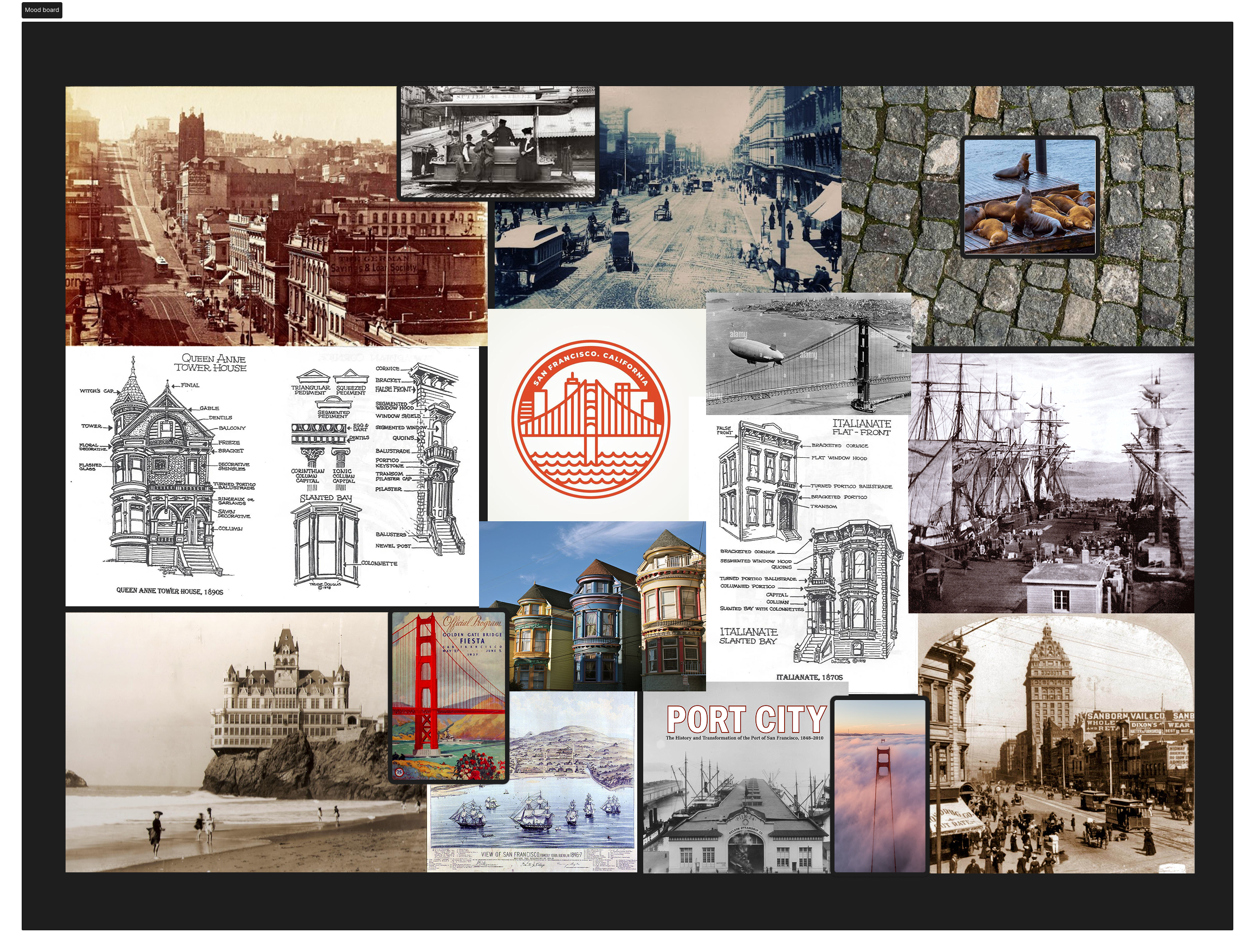
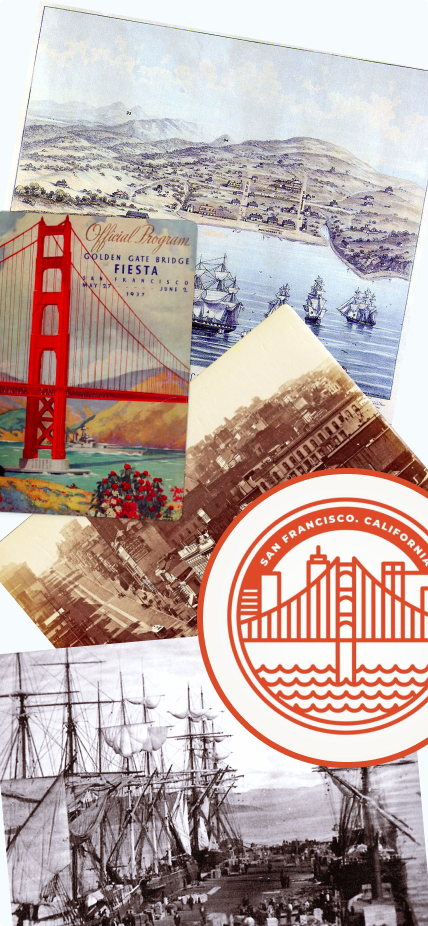
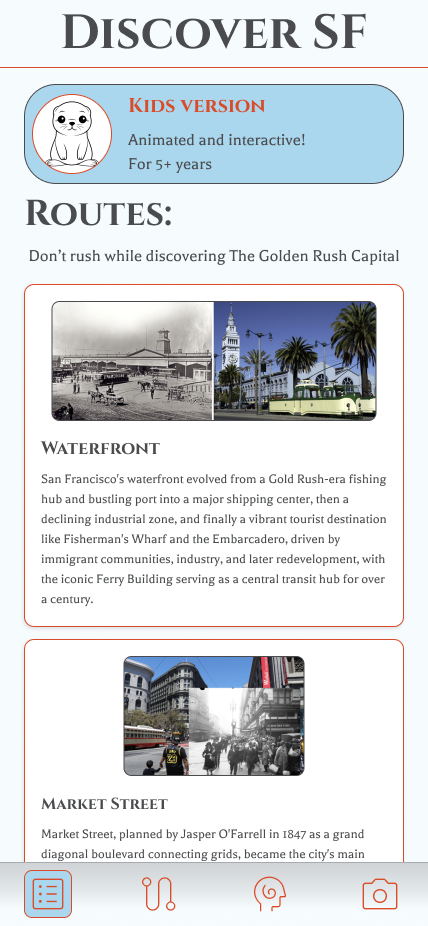
Great technology needs a vessel that makes people want to use it. This San Francisco iteration wraps the LLM in maritime-inspired UI—Cinzel headers echoing ferry terminal signage, soft blues reflecting bay water, vintage typography honoring the city's printed history. But aesthetics serve strategy: every interaction pattern (swipeable timelines, era toggles, location-based unlocks) is designed for walking tourists who need delight, not friction. The interface adapts to context—a museum visitor gets different pacing than a street explorer. This SF theme is one skin; the underlying UX framework translates to any city's visual identity. Tokyo gets neon and clean modernism. Florence gets Renaissance warmth. The agent provides the intelligence; the interface provides the invitation. Together, they create something people photograph, share, and remember.
Engagement Tactics & Revenue Architecture
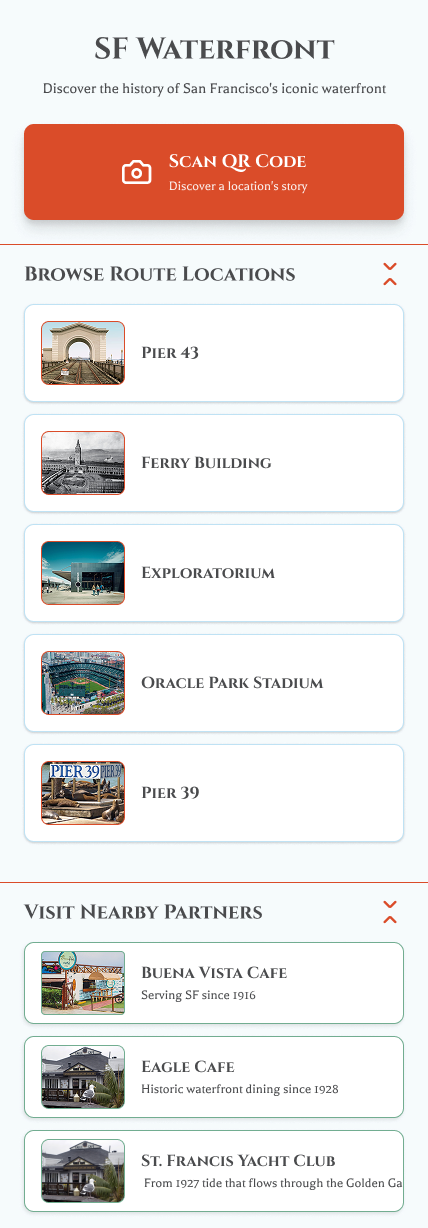
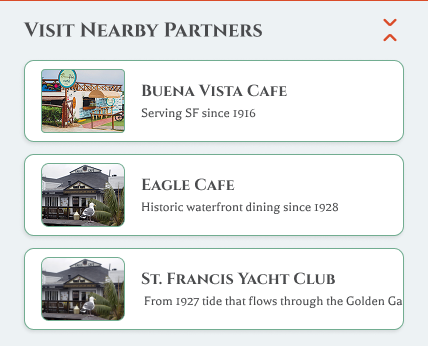
The B2C experience is free—lowering barriers drives adoption and network effects. Monetization flows through two channels. First, contextual sponsorship: local businesses (the 90-year-old waterfront café, the family-owned bookshop) sponsor route moments, appearing as "visit this historical spot" prompts that feel like editorial recommendations, not ads. Users appreciate the curation; businesses get foot traffic from engaged tourists already in discovery mode. Second, B2B licensing: cities and museums pay for white-label deployments. A city tourism board licenses TimeLens to drive heritage tourism. A museum uses it for outdoor exhibitions that extend beyond walls. The pitch shifts from "pay per user" to "unlock your entire archive as living experience." Freemium consumer adoption proves demand; institutional licensing drives revenue.
Where Google Maps shows you how to get somewhere, TimeLens shows you how somewhere became—turning navigation into narrative.
The Path Forward: Partnership & Capital
We're at the inflection point where proof-of-concept becomes platform. Kate Huezo (UX/product strategy) and John Chen (AI development) have built the agent and demonstrated its capability through San Francisco.
Now we're seeking two catalysts.
First: museum partnerships for pilot programs—access to archival datasets that train the model while validating real-world institutional use cases. We're in conversation with cultural institutions ready to turn static collections into dynamic public experiences.
Second: seed funding to pursue spatial integration. We have exploratory talks with PICO XR for VR implementation; we need capital to dedicate one focused month to adapting the model for spatial computing, then roll out an immersive feature where users don't just watch history—they step inside it.
The technology works. The design delights. The market is every city with a story to tell. We're looking for partners who see what's possible when AI doesn't replace human connection to history—it amplifies it.